3 Types of Stock Dogs (And Why You Shouldn’t Train Them the Same Way)
If you’ve ever trained two different dogs using the same exercise — and gotten completely different results — you’re not alone.
And it’s probably not the exercise.
It’s the dog.
In my own training, one of the most important things I watch for isn’t just what the dog is doing… it’s how they respond to pressure.
Do they back off?
Do they push harder?
Do they lock up?
Those reactions tell you what to build — and what to protect.
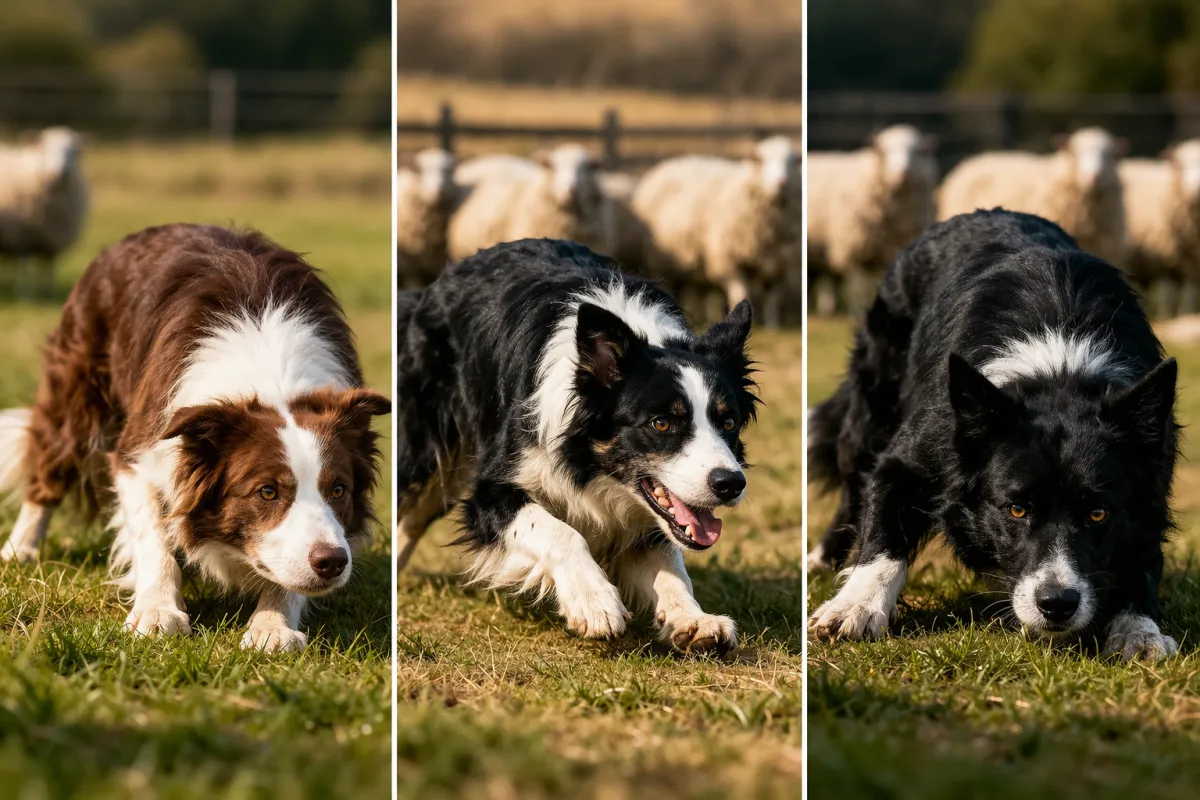
In this post (and the video below), I’m going to walk through three common types of stock dogs, and how your training priorities should shift with each one.
🎥 Watch the Video
Not Every Dog Is the Same
Before we break this down, it’s important to say:
Most dogs are not just one type.
They’re usually a blend.
This isn’t about labeling your dog — it’s about recognizing tendencies so you can choose exercises that build what’s missing and protect what’s already there.
Usually, one tendency shows up more strongly.
That’s what you train for.
Type 1: Loose-Eyed / Sensitive Dogs
These dogs tend to have a softer presence on sheep.
They flank easily and are often very responsive, but they may avoid real contact on the lift.
Because they’re easy to move and easy to control, it’s common to accidentally take too much pressure off them in training.
What to focus on:
Building confidence to walk in
Encouraging responsibility on the lift
Using natural work to develop push
Creating independence near stock
The goal is to help the dog learn to calmly hold pressure — not avoid it.
Type 2: Forward Dogs
Forward dogs bring more natural pressure to the work, but they don’t all show up the same way.
A) Young + Pushy Forward Dogs
These dogs are often driven by excitement.
They rush the lift, chase movement, and can feel chaotic early on.
What to focus on:
Developing a self-regulated lift
Clean off-balance flanks at close range
Establishing a solid stop early
Confirming obedience before adding distance to the work.
If you add distance too soon, you simply increase the chaos.
B) Mature + Hard-Driving Forward Dogs
These dogs have often built strong habits of pushing too hard.
At this stage, they don’t naturally regulate themselves.
What to focus on:
Managing pressure before advancing
Using the stop to interrupt
Creating space between dog and sheep
Rebuilding responsibility on the lift
Breaking patterns before progressing
Type 3: Strong-Eye Dogs
Strong-eye dogs tend to lock onto sheep and build tension.
They may stall on the lift, cause sheep to face them, and create pressure that eventually leads to an explosive moment.
This isn’t a lack of control — it’s a lack of flow.
What to focus on:
Encouraging movement (often with more sheep)
Teaching free flow before control
Using stop → release → forward patterns
Working on varied sheep types
Movement is key for these dogs.
The goal is to reduce fixation and create rhythm.
How to Identify Your Dog
When things start to fall apart in your training, ask yourself:
What direction does my dog go?
Do they back off pressure?
Do they push too hard?
Do they lock up and hold pressure?
Most dogs are a blend — but usually one tendency stands out.
That’s where your training focus should go.
Final Thoughts
Most training problems aren’t random.
They come from applying the right exercise to the wrong dog — or at the wrong time.
When you start recognizing your dog’s tendencies, your sessions become more intentional.
And that’s when progress starts to feel steady instead of confusing.
If you’d like help putting this into practice, you can explore more inside my training program, where I walk through how to plan sessions based on the dog in front of you.
🔗 Related Resource
Why Is Your Sheepdog Stuck? Strong Side vs. Loose Side
Need some fresh ideas for training with your High-Energy, High-Drive dog?
Join us today for a FREE Masterclass