Decrease confusion in your training
Last week we chatted about the topic of “What is the perfect approach to training your stock dog?”
Here are three key strategies I keep in mind when training:
Plan training sessions, so that the dog steadily progresses.
Decrease confusion so your dog's experience is positive.
Embrace the variability in herding, so that tension is decreased.
We worked on strategy #1 and I suggested Taking Action by identifying the strength and weakness for yourself & your dogs. Jot them down. Choose just one or two and make a plan. This will lead to consistent practice.
I hope you have had a chance to think about this!
Today we are going to discuss the second ingredient to finding a perfect approach to training and that is all about decreasing confusion within your lessons.
Decreasing confusion for both yourself and your dog will help you both to see the desired outcome more clearly.
How can you decide what skill or step is confusing? Well think back to your goals you jotted down.
For example, If you’ve spent hours wondering why balance work is important, but something still feels off – like you’re not getting the results, this is likely the piece that’s missing.
Without correctly implementing balance work, you can practice hour after hour and still not have your dog any further ahead understanding the lift, shape of flanks, and pace.
What can you do?
A really useful way to check is to video yourself for a training session and to carefully analyze your body language and your dog’s and stock’s reaction to your body language.
This will tell you if you are unintentionally speeding up your dog which then results in tighter movements and unsettled stock. Or perhaps, as you are “walking about”, as the dog moves to the opposite side of the stock, he is inflicting direct movement onto the stock rather than smoothly running on the perimeter of the flight zone.
If this type of balance work continues, time after time, the dog will pattern and believe this is the correct method to use while working stock. Confusion for the dog will then come when a CHANGE to this expectation occurs. He will need to unlearn the movement and form new habits. This is usually successful, but will take many times to develop into a new feeling and habit.
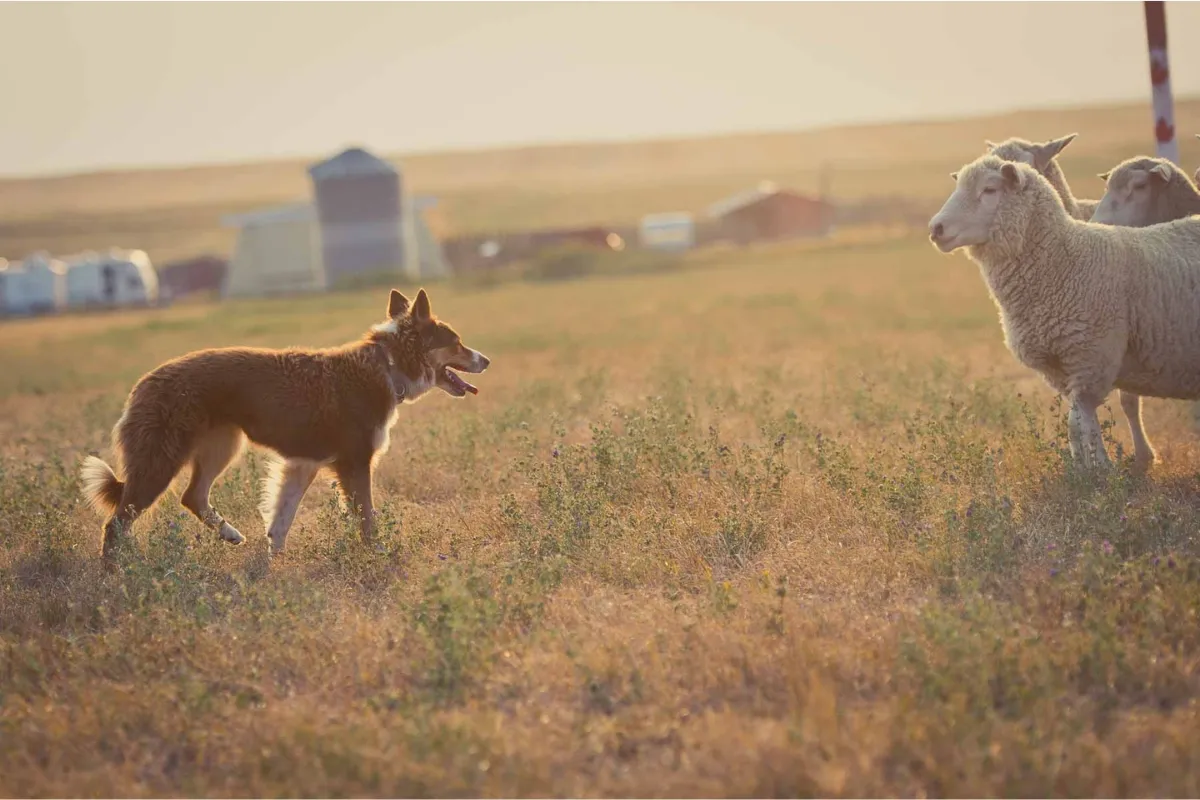
I have included the link to Grace’s latest training session, as we are establishing some balance work guidelines. She is a slower, more cautious pup, but I still need to find a way to show her what I want.
Part 4 - Starting balance Work
In this video she is still too close to her stock, but my focus is getting a STAND command on her, as this will then help me lead her to staying off her sheep. By being a bit further off her stock, she will then begin small outruns, and I can start shaping her turns over her hocks (directional flanks). I am not worried about her speed at this point. I am trying to “Help her be Correct”.
Take Action: Choose one of the goals you noted last week, and carefully analyze what will be needed to make this goal a reality. How will you make this change happen?
See you next week, when we will discuss the third strategy, embracing the variability to decrease tension.
P.S. If you missed Grace's earlier training sessions, click below to read the blog posts and watch the videos:
Click here to watch Part 1 and Part 2
Get My 5 Key Strategy Guide here or select the image below.

