Flight Zones Explained: How Sheep Really Read Pressure in Stock Dog Training
If you’re new to herding and stock dogs, there’s a moment most handlers experience sooner or later.
Everything feels fine…
and then suddenly it isn’t.
The sheep speed up.
Your dog looks like they’re doing “too much.”
You step in to help — and things unravel even faster.
It’s tempting to assume something went wrong with the dog. But more often than not, what’s missing is an understanding of flight zones — and how sheep respond to pressure.
If you’re new to herding, this lesson fits inside my New 2 Herding series, where I break these ideas down slowly and practically — you’ll find the first video at the bottom of this blog post.
What Is a Flight Zone?
A flight zone is the invisible space around an animal that determines when and how it will move in response to pressure.
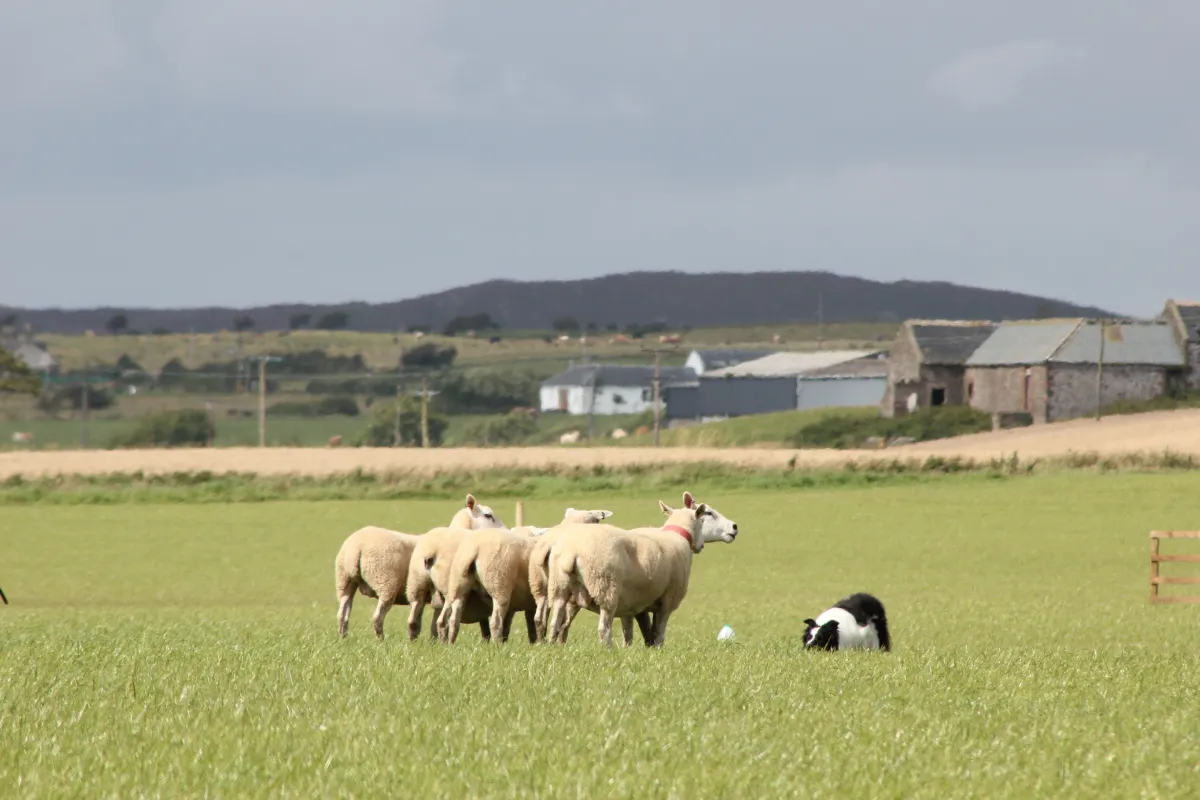
Sheep don’t wait for physical contact. They react the moment that boundary is crossed. Pressure can come from a dog, a handler, a fence line, or a subtle shift in posture. Once you understand that, many “mystery reactions” stop being mysterious.
Sheep Are Prey Animals — Awareness Is Survival
Sheep & cattle experience the world very differently than we do.
As prey animals, their survival depends on awareness. Not thinking. Not analyzing. Sensing.
They have wide peripheral vision and constantly scan their surroundings. They don’t fixate on one thing — they notice change, especially movement and energy on the edges of their vision.
This is why sheep notice posture before speed.
A dog standing still but facing in can create more pressure than a dog moving away.
A handler turning their shoulders can influence movement without realizing it.
Eye contact matters too. Direct eye contact feels intense and predatory. Looking away softens pressure, even at the same distance.
To sheep, intention matters more than distance.
The Group Is Safety
Sheep survive by staying together. The group is safety.
When one sheep feels pressure, the rest feel it too. Heads lift. Bodies lean. The group tightens or drifts toward a draw.
If pressure feels manageable, sheep stay calm and move together. If it feels threatening, the flight zone expands and movement becomes quick and reactive — which is often when herding starts to feel chaotic.
Dogs, Handlers, and Energy
From the sheep’s point of view, dogs are predators. Presence alone matters.
A dog’s eye, distance, angle, and approach all influence how sheep respond. Young dogs often have changing flight zones as confidence builds. Strong-eyed dogs usually need more distance; loose-eyed dogs can work closer.
Handlers matter too. Where you stand, how you move, and your energy all add pressure — often without you realizing it.
Flight zones are not fixed. They expand with stress and shrink with calm. Fast movement adds pressure. Soft movement releases it.
Why Flight Zones Change Everything
Once you understand flight zones — the sheep’s, the dog’s, and your own — herding slows down.
Your timing improves.
Your dog relaxes.
You stop reacting after things happen and start seeing the moment before they do.
This foundation is at the heart of my New 2 Herding series, because without it, everything else feels harder than it needs to be.
Get My 5 Key Strategy Guide here or select the image below.