Is this the stock dog for me?
For year’s , we’ve been hearing that a particular blood line, breed or style of dog is the best for doing stock dog work, and maybe even the ONLY way to successfully move stock. I just read another social media post with the same message, selling the same pitch. And since everyone seems to be saying it, it must be true. Right?
Uhh… no.
I think most of this advice is coming from a place of good intentions. But it’s easy advice. And not only does one type or line of dog not work for everyone, within these lines, certain styles of dog definitely don’t suit everyone.
Let me give an example. I like my sheep to be moved calmly and without excessive force such as gripping. This means that my dogs have the ability to grip if needed, but for the most part can move the stock by presence alone. I don’t like needlessly doctoring livestock that have been harassed excessively.
So when I choose the line of dogs that will suit my needs, I look for parents that have fairly low tension, stand on their feet, and can walk directly into the stock. Now, this doesn’t mean that the offspring will follow these genetics, but there is a likelihood they might. Of course, the training and environment will also play a part.
For many years, I bought into the idea that the “popular” line (of that time) would work for me, and sometimes they did, but more often than not, they didn’t. WHY? These dogs were super talented and many well known handlers ran them; however, they didn’t suit my needs.
Here’s the thing, understanding the type of dog that will partner and work with you will take time. It took me years.
Here is my list of the type of dog I prefer, and I am sharing this only to provide an example of what works for me. You will need to think about what will work for YOU!
Medium to loose eye
Biddable
Smooth moving, low tension
Presence to move stock
Heart to keep trying
Ability to do practical & competitive work
I am only discussing “working” ability here, not health related matters. I strongly support health testing, but that’s a different conversation for now.
I love training dogs that will work with me, have heart and just plain keep trying. Even if they don’t know the skill needed, I can usually train that.
So what happens if one of my dogs doesn’t meet my “criteria”? I am the type of trainer that believes it’s up to me to develop a training plan that will suit this dog - that’s my job. Once trained, this dog certainly might be a very good fit for someone else.
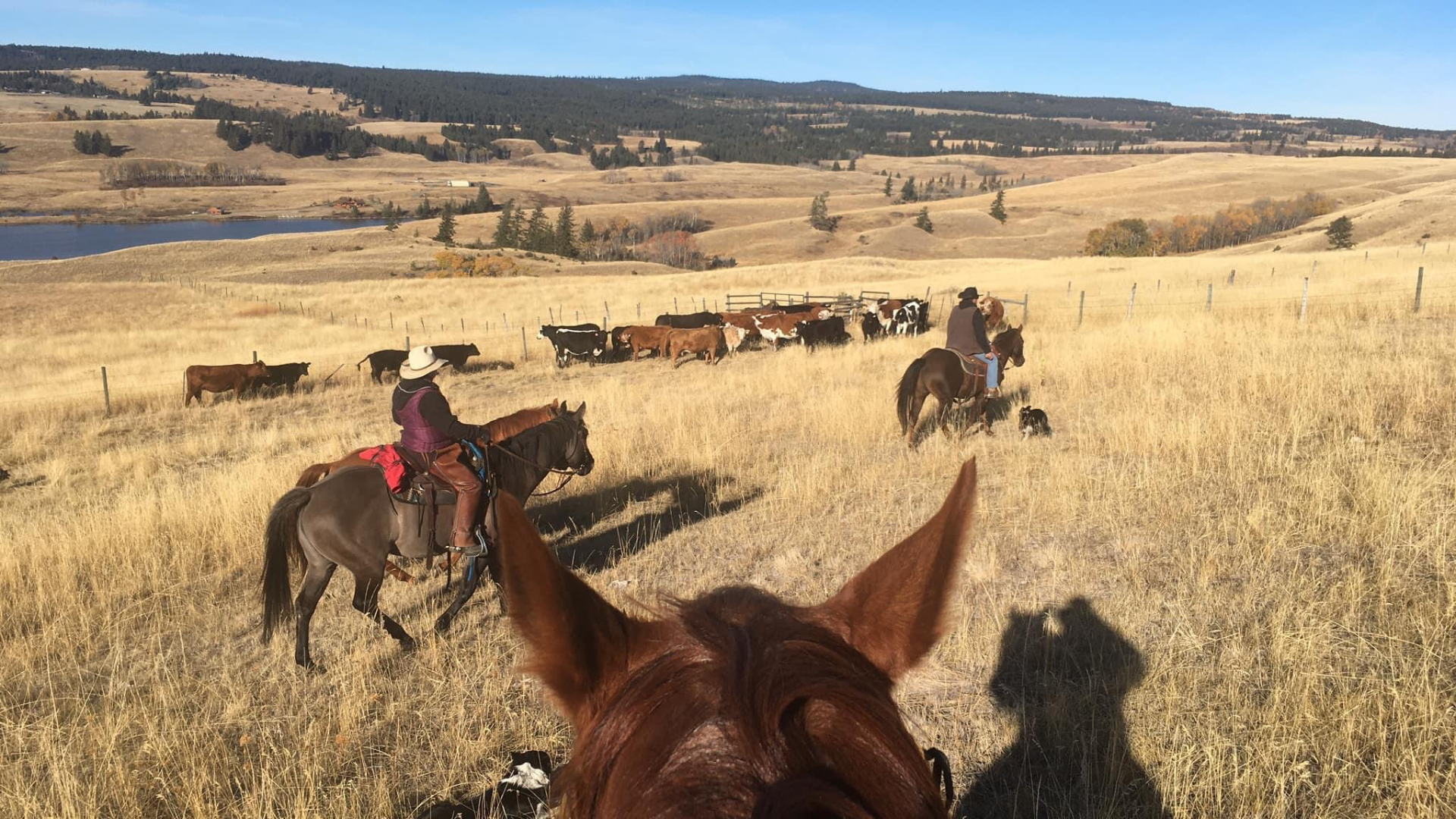
A few years ago, I raised and trained a beautiful smooth coated border collie named Bess (right side of picture above). She had a tremendous temperament and working ability on both cattle and sheep. Her fault (for me) was that she had quite a bit of eye and carried some tension, so on the trial field she was too explosive. As a work dog, she was brilliant! I placed her on a working ranch, as a work dog, who lived in the house, and played with the grand-children. Her dream home! A perfect fit!
I firmly believe there is a “job” and good home out there for most dogs. A handler that has a different criteria than mine and that the dog will suit perfectly.
Find everything you need to shape your stock dog's future... all in one place. An online school for stock dog owners.
Trusted by hundreds of passionate stock dog owners worldwide.
Join us today & get started with lifetime access!

