Stand vs Down: How Position Changes the Stock
Most handlers think choosing between a stand and a down is about control.
But in reality, your dog’s position directly changes how they influence the stock.
And once you start seeing that, your training decisions become much clearer.
🎥 Watch the Full Training
It’s Not Just a Command — It’s Pressure
One of the most important things to understand is that position changes pressure on the flight zone.
A dog that’s standing:
carries more presence
appears bigger
and tends to influence the stock more
A dog in a down:
softens that pressure
can slow things down
but can also reduce influence
But even within that, there’s nuance.
A dog lying straight into the sheep can still create quite a bit of pressure, while a dog slightly off to the side will feel softer.
So this isn’t just about choosing a command—it’s about understanding how your dog is affecting the stock in that moment.
⚖️ Matching the Dog in Front of You
Different dogs need different approaches.
A pushy, forward dog often benefits from more use of the down, and being stopped further away from the sheep
A softer or more thoughtful dog often needs to stay on their feet to maintain presence and confidence
These aren’t rules—but they’re useful starting points.
Ultimately, the stock will tell you what’s working.
🧩 Don’t Rush the Commands
One of the biggest shifts you can make in your training is to delay adding too many commands too early.
Instead, focus on:
how your dog approaches the stock
how they respond to pressure
how they use their body
Commands should come after understanding, not before.
When you rely too heavily on commands—especially the down—it’s easy to fall into the habit of repeating yourself, rather than teaching the dog how to think.
🐾 Teaching the Stand Naturally
The stand is a particularly useful tool because it’s something dogs often offer on their own.
That moment where your dog:
hesitates
pauses
checks in
That’s where learning is happening.
Rather than forcing the behavior, you can begin to recognize it and name it, building clarity without interrupting the dog’s thought process.
🎯 The Goal: A Dog That Thinks
At the end of the day, the goal isn’t just to get a position.
It’s to develop a dog that can:
adjust their pace
read the stock
and make better decisions without constant input
That’s what leads to calm, efficient stock work.
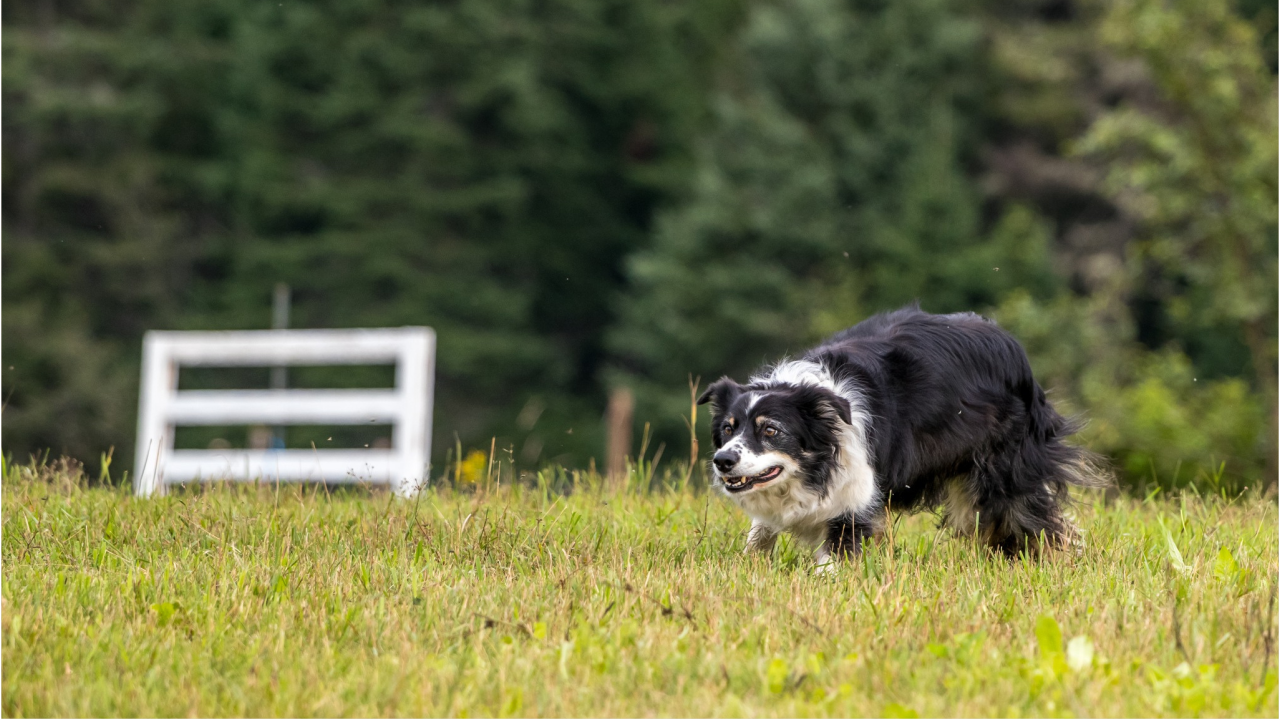
You’ll see this in action in the video above, where I work Annie on sheep and walk through how these ideas come together in real time.
Are you ready to develop a true partnership with your dog?
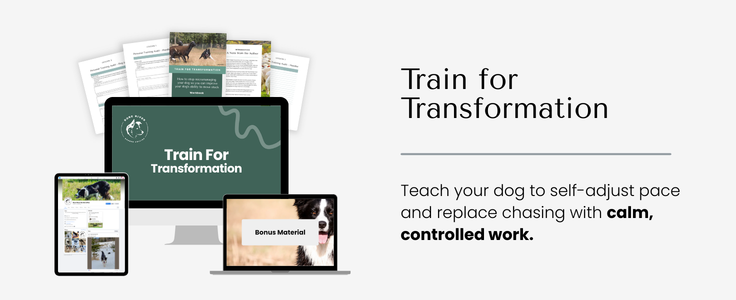
Join the Train for Transformation program. The series that's all about STOPPING the uncontrollable "chase" and teaching your dog to self-regulate it's pace.