The Power of Patience in Training Stock Dogs
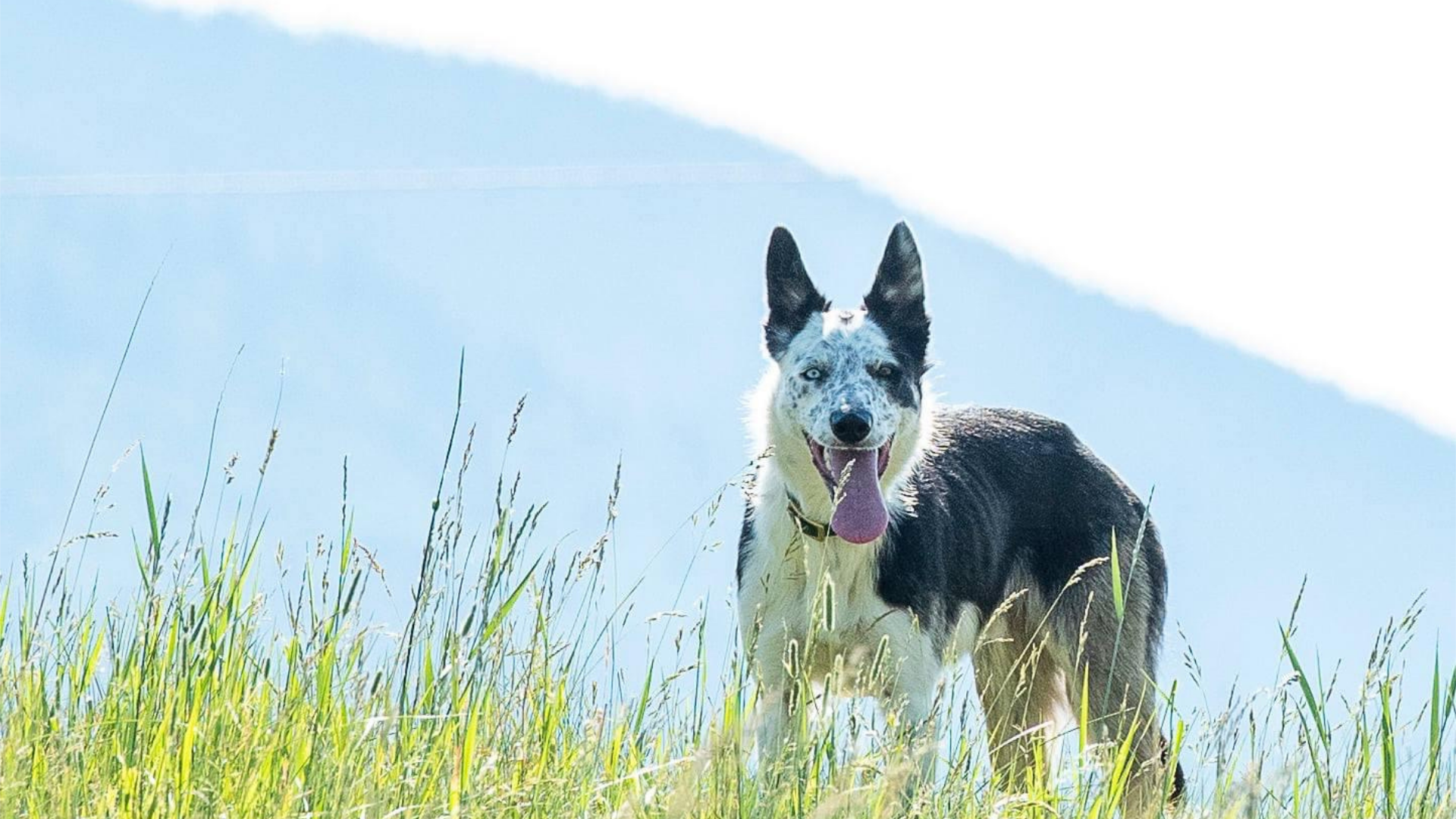
I have been reflecting on the journey so far of one of my dogs, Sommer Sam. This reflection came about because I recently moved him from the lower classes of Nursery and Pro Novice, up to the Open class for the field trials.
When I begin the process of training any of my dogs, my end goal is always to have a decent working dog that can work both on the farm and compete in field trials in the Open class. In Western Canada, the Open class often includes outruns from 400 - 700 yards and drives with significant distance moving challenging sheep. This class also includes a shed, pen, and usually a single.
I often find, the outrun is easy for most dogs, but whether the dog can handle a decent lift and maintain proper pace on the fetch is another story. The drive is another element that the dog has to master. Not only with distance, but also precision.
So, I thought I would share a few of Sam’s struggles and wins from the past few years (he just turned 4) and how I decided he was ready to move to the Open Class.
This post may help in planning for your own dog’s training.
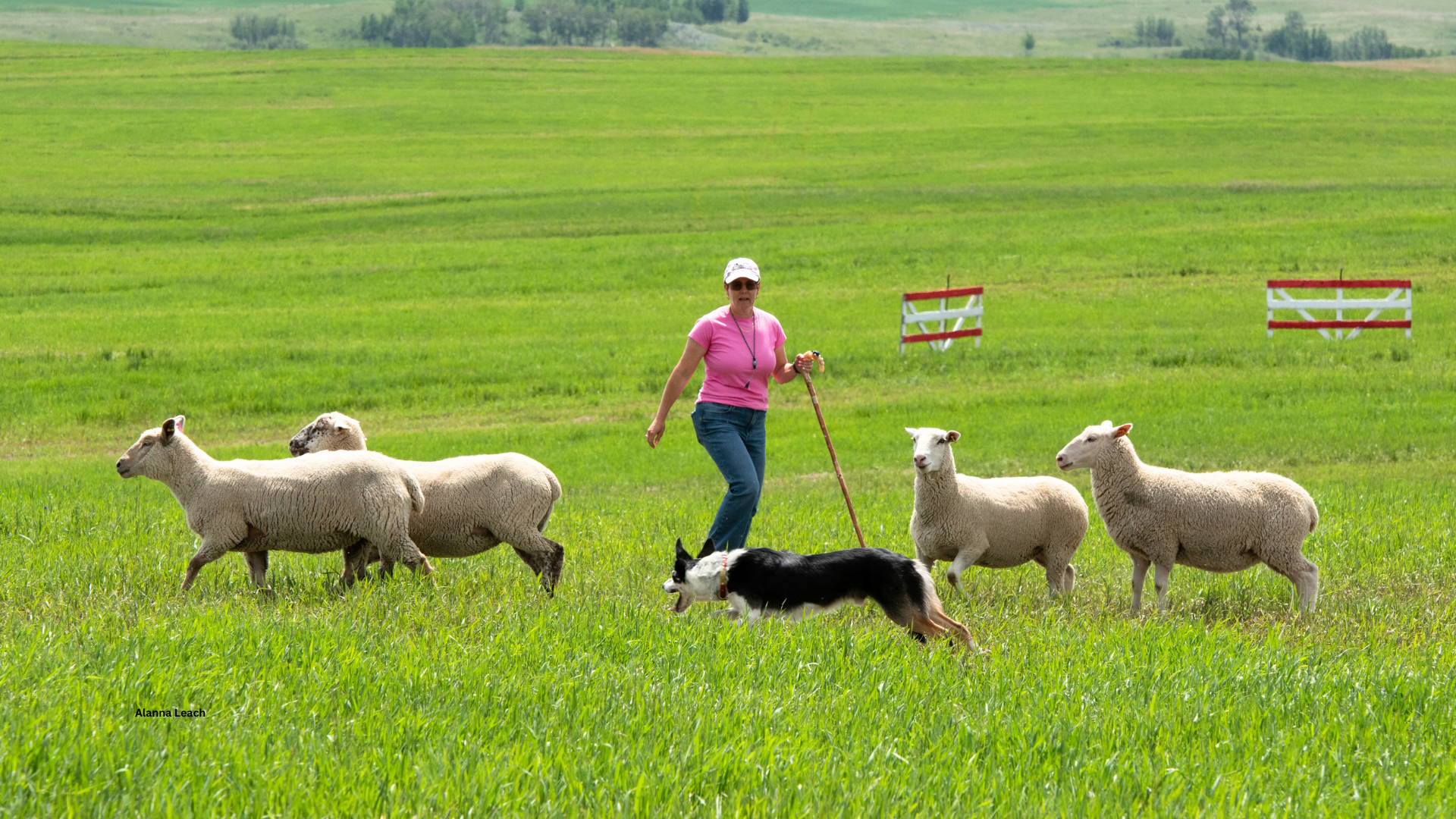
Training a stock dog is a journey of skill and experience, but for me one quality stands out above all in ensuring success and that’s patience. While it may seem like an obvious trait, the role of patience in training these remarkable dogs cannot be overstated. Here’s why patience is not just a virtue but a necessity in cultivating a well-trained stock dog.
Understanding the Learning Curve
Stock dogs are intelligent and eager to work, but they also have their own pace of learning. Patience allows you as a handler to recognize that every dog has a unique learning curve. Pushing too hard or expecting immediate results can lead to confusion and frustration for both the dog and the handler. By setting realistic goals and providing consistent, gradual training, you create an environment where the dog can absorb and master each new skill at its own rate.
Here is an example from Sam’s journey. Last year, he ran in the Nursery class and Nursery Finals. He handled all the outfield work well (outrun, lift & fetch), but struggled with the precision of the driving.
His mind wasn’t handling my commands easily and he was becoming pressure sensitive to the stock. This means, when he was under pressure to hold the sheep on a line or to me at the pen, he was starting to let go. This was displayed as his eyes averting or head turning away from the stock. Sometimes, he would flank out to release the pressure.
During this same year, I also competed with Sam in several arena trials. These trials can be super fun, but do require a lot of commanding, in a tight space, to get through the obstacles. Early on in the season, he ran really well, but by the fall, he was also showing sensitivity to holding pressure.
I knew I needed to make some changes for his winter training and the next trial season in order for him to be successful.
Handling Setbacks Gracefully
Each dog’s training encounters setbacks. Whether it’s a sensitive behaviour like Sam’s or an unexpected challenge such as a dog beginning to cross over on the outrun, patience helps you handle these obstacles gracefully.
Instead of viewing setbacks as failures, a patient trainer sees them as opportunities for problem-solving and learning. This perspective helps maintain morale and keeps the training process on track, ensuring that both you and the dog stay motivated and focused.
So, rather than getting upset with Sam’s behaviour, I gave him a break from all training for about a month, and then brought him back doing only practical work. We didn’t “train” on anything in particular, but I spent time allowing him to “get in and move” the stock. This looked messy at times, but I refrained from asking for anything pretty. If the dog can’t hold and move stock, there isn’t much hope for him as a stock dog!!
He also spent more time working in pens, chutes, and moving ewes and lambs. I helped him anytime he struggled and never put him in a position that was “over his head”. We did this type of work for almost 4 months and continue to do so. (Learn how to train in a confined space here)
Encouraging Resilience and Adaptability
Patience in training also teaches stock dogs to be resilient and adaptable. By allowing Sam time to understand and adjust to various tasks and commands, I was helping him build confidence in his abilities. This gradual approach not only improves the dog’s skills but also prepares them to handle the dynamic nature of stock work with calmness and competence.
The Long-Term Reward
While patience might seem like a slow path, it often leads to the most rewarding results. A patient training approach fosters a well-rounded, reliable stock dog capable of handling complex tasks with ease. The investment of time and patience pays off with a dog that is not only skilled but also enthusiastic and engaged in its work.
I decided early on this year that if Sam showed me he was confident and comfortable, I would move him up into Open class mid season. He ran in 2 field trials prior to this move and did well, so his first big Open trial was the Canadian Border Collie National Finals in August. I also decided NOT to enter him in any arena trials for the season and to do limited to no set out with him at the trials. I wanted to focus on him solely being happy and confident for field trials.
Sam placed 5th overall out of 70 dogs after two runs at the CBCA National finals and made the Double Lift Finals on Sunday. While we didn’t have luck in the finals, I was thrilled with how he handled the big course and difficult sheep. One week later, he made his second double lift finals after handling the massive HillTop Open Sheep Dog Trial runs. (Next week, I will share some of his runs.)
The bond Sam & I have is so incredible! We both have our flaws, but of course, we will keep trying to improve. Training a stock dog isn’t just about teaching commands; it’s about building a deep, trust-based relationship and patience plays a crucial role in fostering this bond.
So, next time you step into the training arena, remember: patience is not just a virtue; it’s a powerful tool for achieving excellence.
Need some fresh ideas for training with your High-Energy, High-Drive dog?
Join us today for a FREE Masterclass