The Role of Long Lines in Effective Stock Dog Training: The Pros & Cons
Recently, one of our Dore River Academy Bootcamp members asked about the use of a long line while training her dog, so I thought I would share how I integrate this tool into a training session.
For 95% of the dogs I train, a long line is only used as a temporary measure. The majority of young dogs I start on stock, don’t need a line, except maybe to practice recalls off the stock. Here are some examples of when I use a long line, please remember, this is only one training strategy and many others are also in play.
The Pros:
Improving the Recall and Basic Obedience:
With young dogs, establishing a reliable recall is crucial. A long line allows me to catch the dog and guide them back to me. I can also work on the Down command while the dog is further away from me.
2. Preventing Grips on Stock:
During the early stages of training, some dogs might get overstimulated and nip at the stock. If this is just a one off behaviour, I’m not too worried about any form of correction. If however, it’s a dog that is particularly stimulated to bite inappropriately, then I will use a long line to help prevent and/or correct the behaviour. The line provides a way to check the behaviour.
3. Assisting in Driving:
For the dog that just can’t help to head the stock, a long line can help guide them into the right position until they learn to walk behind the stock. I usually do this after starting the drive in a narrow alley or along a roadway, as many dogs won’t need the line.
4. Walking to the Stock:
In the early stages of training, a line helps me to get into the training field and around the sheep, without having the dog take off on me. This preventative measure also stops the dog from learning that she can run through and chase the stock.
5. Enforcing a clean flank:
With the sheep in a corner and me and the dog on the outside, I can use a long line to bump the dog if the flank is not clean.
For more ideas check out our training blog called, My go-to Training Tool.
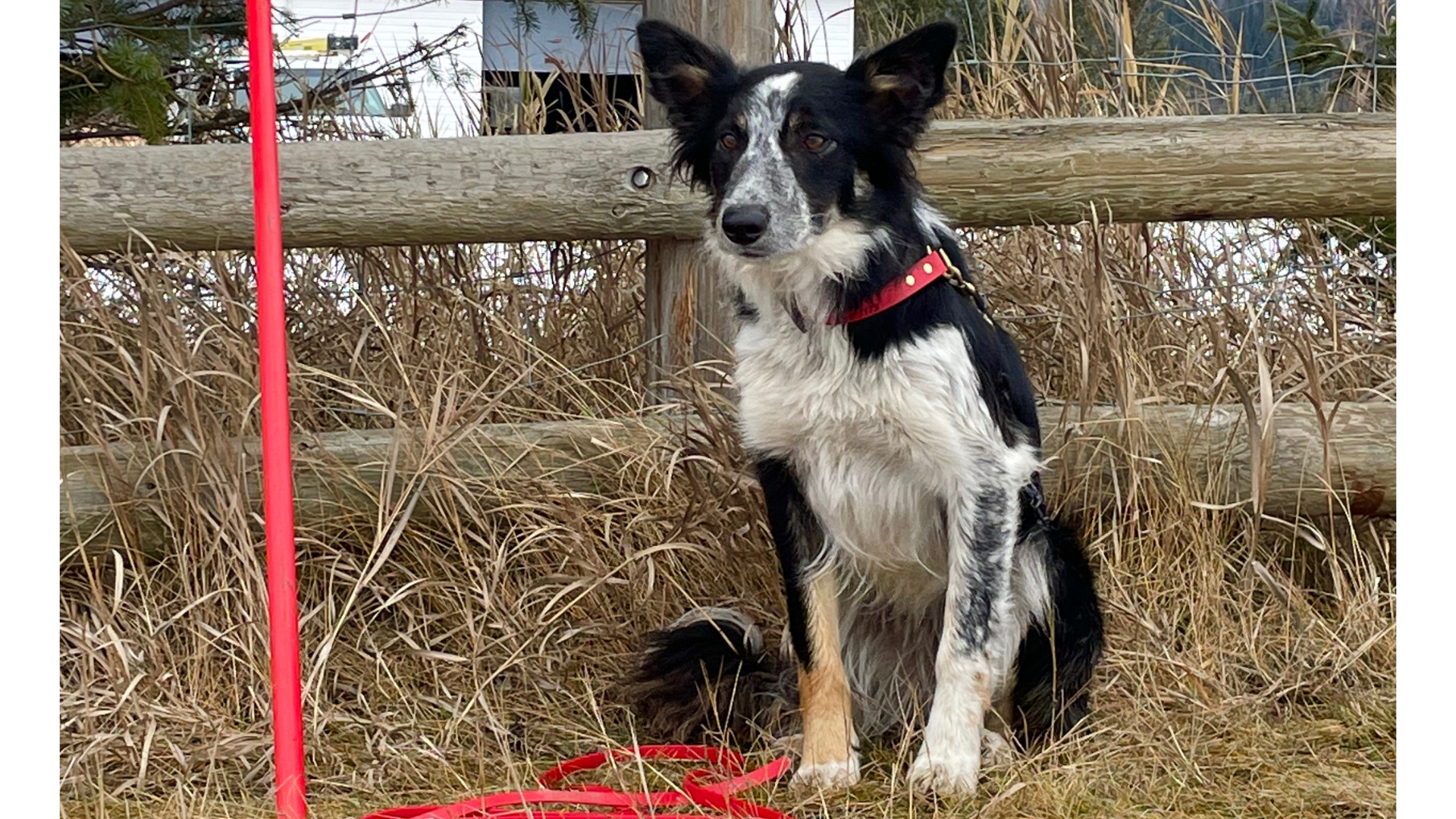
The Cons of Using a Long Line
Potential Hazards:
Long lines can pose a tripping hazard for both the handler and the dog, and if tangled around the stock, it can lead to dangerous situations.
Skill Level Required:
Effective use of a long line demands a certain level of skill and attention from the handler. It is essential to remain vigilant and responsive to avoid accidents.
Other Issues:
Be cautious that the dog doesn’t start turning back towards you or worse yet, turning around (turn tail) while working stock. I want to discourage the dog from watching for me when she should be focused on the stock.
If used incorrectly, the line can cause a lot of tension in the dog, so it’s important to read the dog’s behaviour.
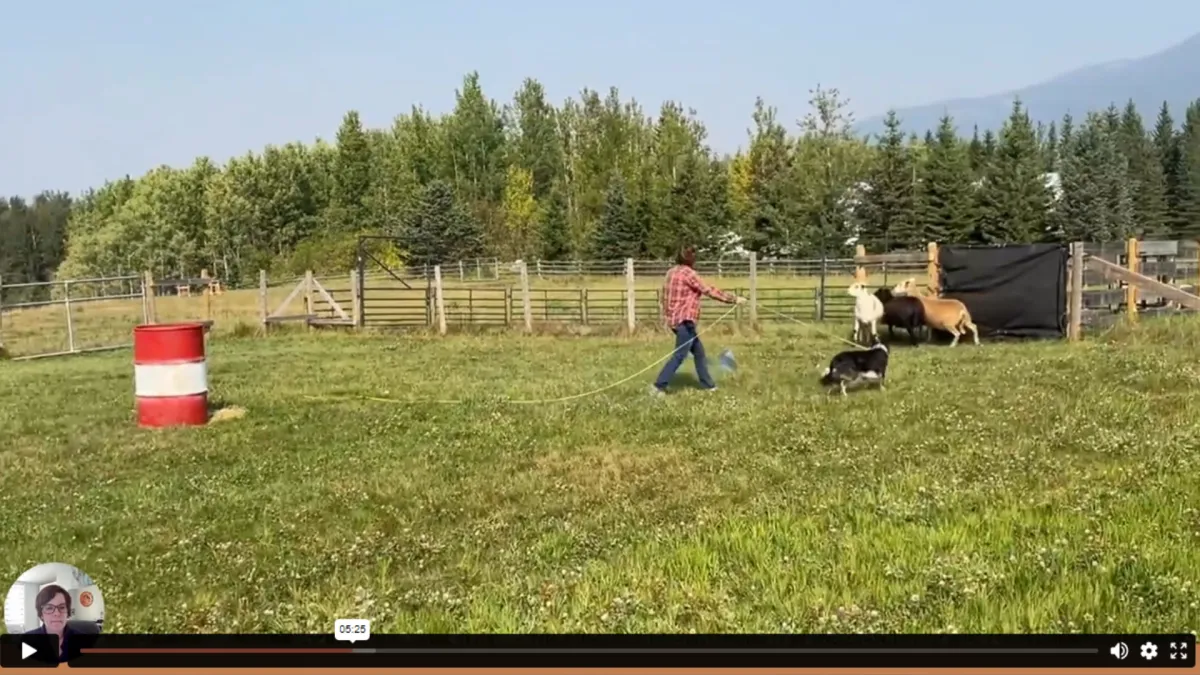
Here is a short clip of 9 month old Ted working with a long line to assist in understanding the STAND & how to follow behind the sheep on the drive.
Safety:
Always wear boots, full pants, and gloves while training with a long line to prevent rope burns.
Types of Lines:
I use various lengths and have 10 ft - 50 ft lines, all ⅜ inch wide and made from Biothane. I also use a thin cord for the odd dog. Always make sure the line is free from knots so that it doesn’t catch on objects. I purchase my lines through Sommer Ranch Stock Dog Supply. LINK HERE
Getting your dog used to the Line
Attach the line and let your dog drag it while you go for a walk. Always supervise the dog and don’t leave the line on when the dog is out playing or running with others.
Takeaways:
While the long line is an invaluable tool, it does require careful handling and practice. Used properly, it can really help shape the desired movement.
I try to use the line as a little as possible, but in some instances (as mentioned above), the line can make the session much more productive. The line is just a tool that is used in conjunction with other training methods such as body position, placement along a fence, etc. I only use them to support a particular session and remove the line as soon as possible.
Get My 5 Key Strategy Guide here or select the image below.

