What is the perfect approach to training your stock dog?
Every stock dog owner struggles at times to train consistently. For you, this might mean a busy family/work life, or a pile of snow in the field, calving/lambing time. Perhaps, the struggle is more about the content of the lesson or questioning what skill to implement next.
We get stuck wondering things like, “Will I ever get back training regularly” or “how do I know what skill my dog should learn next?”
When you’re unsure what to do, it’s hard to move forward.
The good news is, you can easily bring order to the chaos by implementing consistency into your sessions by mapping out each of your dog’s training needs (based on fact!)
In this post, I’ll define consistency within your training program and provide 1 of 3 strategies for increasing your chances of training success. I hope that this will provide you a roadmap to get started with a consistent training program and ultimately have a dog that can move stock calmly & effectively.
What is the perfect approach to training your stock dog?
“Embrace the variability!” WHAT, YOU SAY??? We were just discussing consistency!!
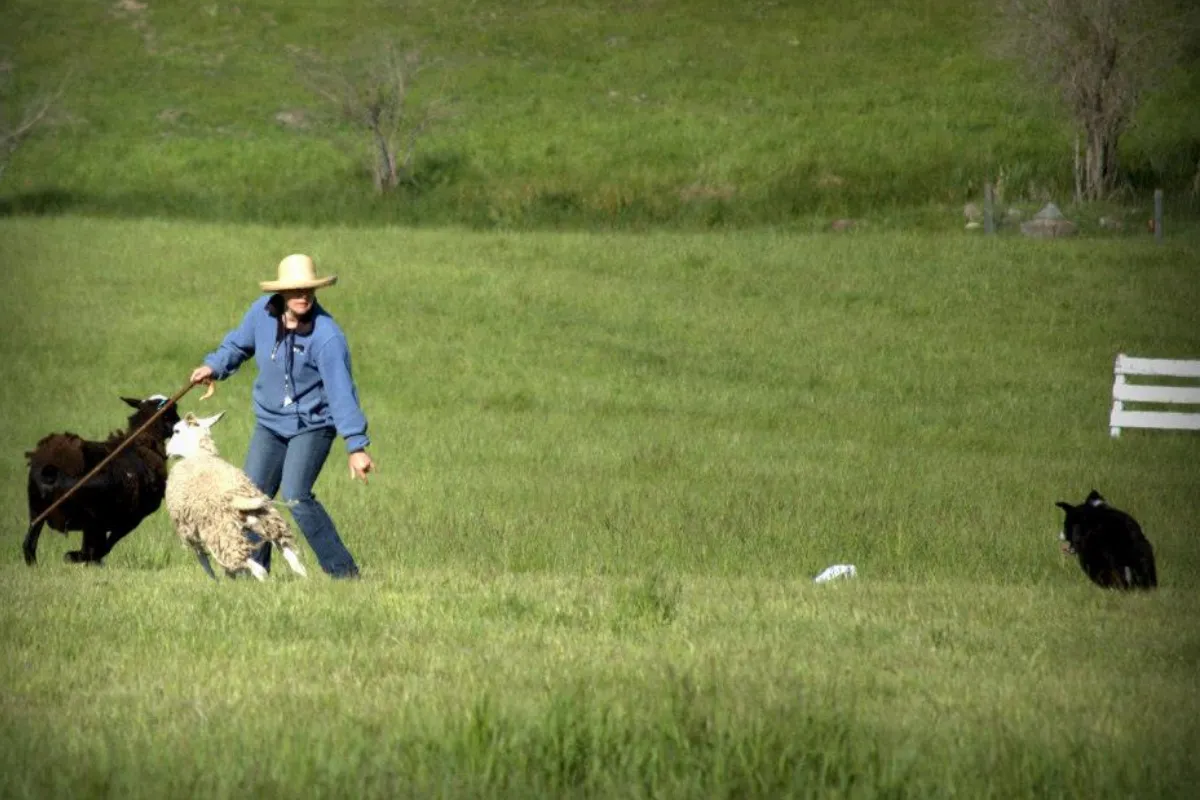
Well, training a herding dog is challenging and as a handler, adapting to the situation at hand is key. The stock behaviour can change in an instant and then this will cause the dog’s react accordingly.
Here are three key strategies I keep in mind when training:
Plan training sessions, so that the dog steadily progresses
Decrease confusion so your dog's experience is positive
Embrace the variability in herding, so that tension is decreased
Strategy #1 - Planning the training session
Make a plan, don’t wing it! This is a crucial component because practising the wrong way over and over, won’t get your dog very far. Making a plan lends itself to positive, consistent practice.
Many people who are new to stock dog training start out on the right track but then get stuck because they don’t know how to proceed. They don’t realize there’s a formula to it or they are using the wrong technique. And then they wind up wasting a lot of time and becoming frustrated.
The key to getting the most out of training sessions is to ensure you understand where your dog is at - what's the starting point? If you know that understanding stock is holding up your progress, then make that a priority. Help a friend move sheep, watch videos of stock being handled and moved.
Watch Video - Sheep Behaviour when Herding
Watch Video - Using Natural Cattle Behaviour to Move Cattle
Watch Video - Proper Use of Driving Tools -Dr. Temple Grandin
If you feel comfortable with the terminology used while herding (outrun, balance, flanks, etc.), then do a little research, so that when you are training, you fully understand what’s going on.
Watch Video - Basic Commands For the Sheep Dog - Thomas Longton
If you are not sure about the “WHY’s” of particular elements (why is a calm, confident lift vital or a stop necessary sometimes, but not others), then get in on some discussions and challenge yourself.
Wow! That’s plenty for today, now it's your turn to MAKE A PLAN.
TAKE ACTION: Identify the strength and weakness for yourself & your dogs. Jot these down. Choose just one or two and make a plan. This will lead to consistent practice.
Leave a comment below for some ideas!
Next week, we will take a moment to talk about decreasing confusion within your lessons which will ultimately lead to a more consistent result.
Get My 5 Key Strategy Guide here or select the image below.

