Holding the Line: The art of balance when your stock dog is driving
Often handlers struggle to understand the connection between “balance” and driving. Inside the Dore River Training Academy Bootcamp program, we emphasize the importance of balance not just in training young dogs, but also in activities such as shedding, penning, and driving.
In a couple past training Blogs, we dove into the nuances of balance within penning here in a post called "Load up that Pen" (LINK HERE) and also when shedding in a blog called "Balance & the Shed: A key combination for success" (LINK HERE)
So just before I demonstrate how balance works with driving, let's take a quick review of balance.
Balance refers to the ability of the dog to place itself in the optimal position relative to the sheep. A well-balanced dog intuitively knows how to adjust its position to maintain control over the sheep, whether it's guiding them around a course, separating individuals, or moving them through gates. This dynamic positioning allows for smooth and effective management of the flock, minimizing stress and maximizing productivity during tasks. Here in the post, "Using balance to pen sheep", I demonstrate without using commands, exactly how balance works when the dog is holding sheep to me. LINK HERE
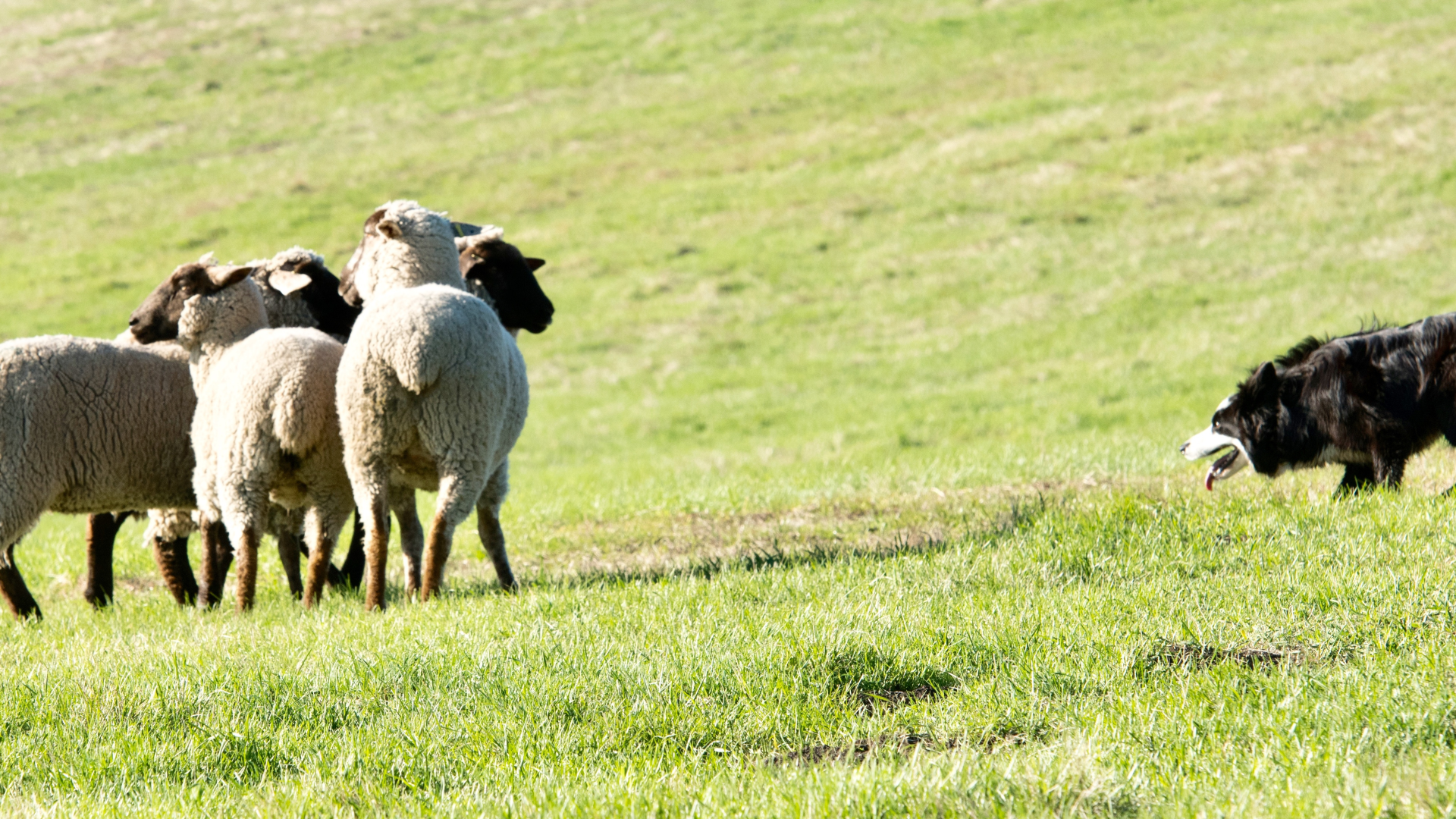
When the dog has control over the lead sheep, the dog will “hold” the lead by moving freely as needed to keep the group, led by the lead sheep, moving forward. This can apply on the fetch and on the drive.
One of the critical tasks where balance is evident is in holding the line for a drive. Have a look at this video where I use a white board to demonstrate.
I now demonstrate with Bryn & Annie how this technique is about the dog's ability to maintain influence over the lead sheep, ensuring the flock moves steadily in the desired direction. Whether on the fetch or on the drive, the dog must understand how to move freely and assertively to keep the lead sheep and its followers on track.
Some dogs, “hold the line” much easier than others. I find a dog with a bit more eye tends to hold the lead sheep easier than a looser-eyed upright dog.
When watching Bryn & Annie, you might notice that while Bryn is much more experienced than Annie, she also has a bit more eye. She uses this eye to control the lead sheep. Whereas Annie, has less eye, she tends to float more when moving and will have to be taught how to use her eye more. This will then help her to lock onto to hold the pressure points from the sheep.
This is a really interesting topic and I can’t wait to hear how your manages with “holding the line”
"The key to keeping your balance is knowing when you've lost it." — Anonymous
Find everything you need to shape your stock dog's future... all in one place. An online school for stock dog owners.
Trusted by hundreds of passionate stock dog owners worldwide.
Join us today & get started with lifetime access!

